


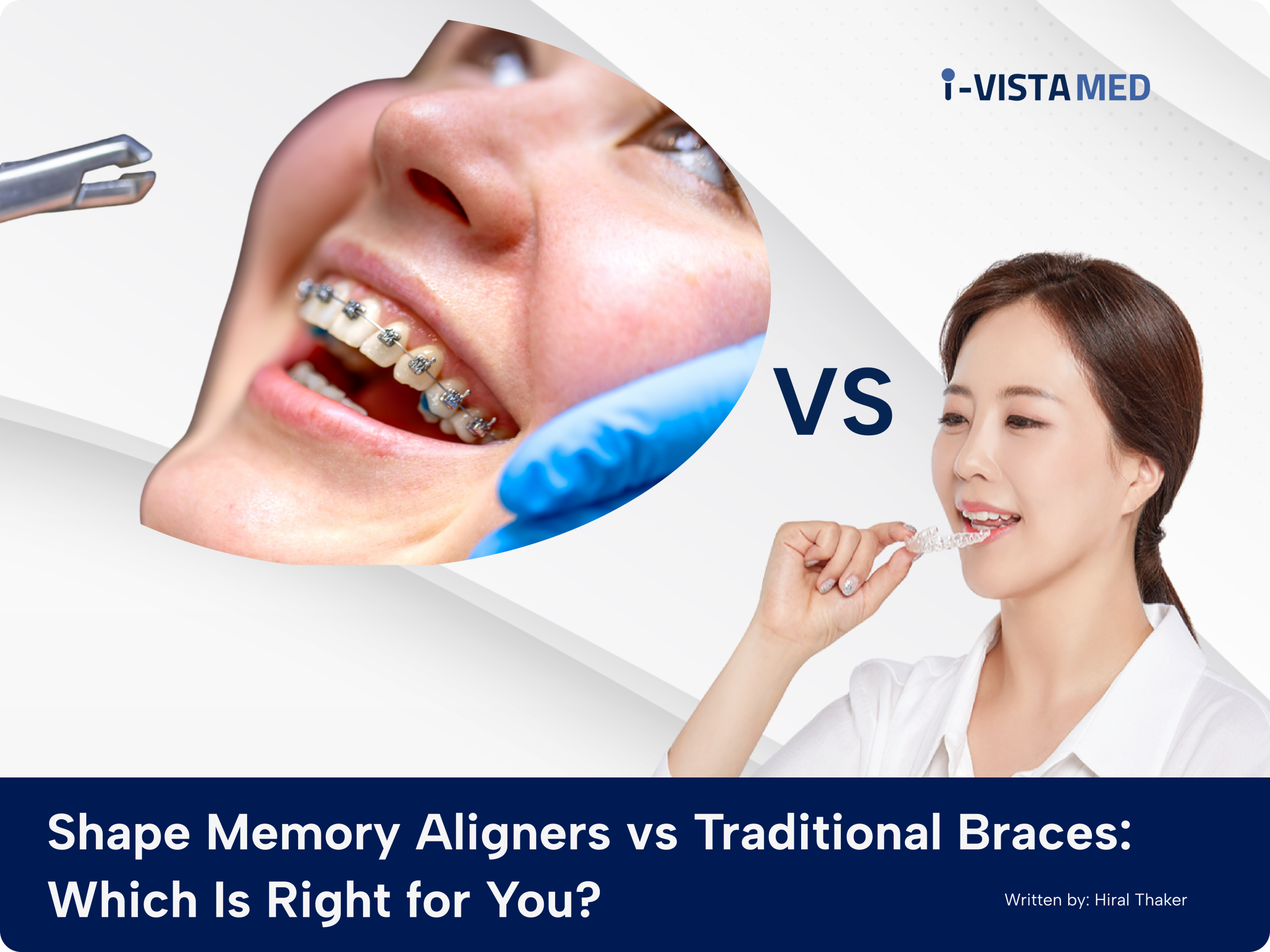
Choosing an orthodontic treatment used to mean one decision: metal braces or nothing. Today, the choice is more nuanced. Clear aligners have reshaped the industry, and within that category, a newer material class called shape memory aligners is changing what clear aligner treatment can do. Understanding how shape memory aligners compare to traditional braces, and where they fit next to standard clear aligners like Graphy’s shape memory aligners can help you make a more informed decision about your smile.
This guide breaks down how each option works, what to expect day to day, and how to think about cost, comfort, and results before you commit to a treatment plan.
Traditional Braces:
Traditional metal braces are the most established orthodontic treatment. Brackets are bonded to each tooth and connected with a wire, applying continuous pressure that gradually shifts teeth into their corrected positions. As pressure is applied, the surrounding bone reshapes to support the new alignment.
Modern brackets are smaller and more comfortable than older versions, which reduces irritation on the cheeks and lips. Still, their visibility is a common concern for patients considering their options.
A few things to know about traditional braces:
- Application: Brackets are bonded to the teeth and worn 24/7. They cannot be removed until treatment is complete.
- Appearance: Braces are the most visible option, though clear brackets or colored bands can make them more discreet or more personalized.
- Maintenance: You can brush and floss as usual, but sticky, chewy, and hard foods need to be avoided to protect the brackets and wires.
- Pros: Because braces cannot be taken out, they work well for patients who might forget to wear a removable appliance consistently. They also tend to handle more complex alignment cases effectively.
- Cons: Braces limit certain foods, can cause discomfort after adjustments, and require extra care during contact sports. Because brackets are fixed, oral hygiene takes more effort, and the visible metal appearance is a common reason patients look for alternatives.
Traditional braces remain a reliable choice, especially complex bite corrections. But for patients weighing traditional braces vs aligners, the calculation now includes a newer option that didn’t exist a decade ago: shape memory aligners.
What Are Shape Memory Aligners?
Shape memory aligners are a distinct category of clear aligners, built from a material that behaves differently from standard aligner plastic. Instead of being thermoformed over a mold, like most clear aligners on the market, shape memory aligners are 3D printed directly from a biocompatible resin. This is where the term 3D printed aligners come from, and it’s a meaningful shift in how aligners are manufactured, not just how they look.
Graphy, a South Korean material science company, pioneered this approach with a resin it calls Tera Harz. Graphy dental aligners are printed directly into their final form using digital treatment planning software, skipping the model printing, thermoforming, cutting, and finishing steps that conventional aligners require. The result is a faster manufacturing process with fewer points where errors can occur.
The defining feature, though, is the shape memory effect itself. At room temperature, a shape memory aligner is rigid. When warmed, either by body heat inside the mouth or with hot water before insertion, the material softens and becomes flexible enough to fit over the teeth comfortably. As it cools and returns to its originally printed shape, it applies to steady, controlled pressure that moves the teeth into position.
This matters because standard aligner plastic behaves differently. Conventional aligners are stretched over the teeth and gradually lose their holding force as the plastic deforms over the course of daily wear. That’s why most clear aligner treatments require a new tray every one to two weeks. Because shape memory aligners return to their original printed shape instead of just deforming, a single aligner can often complete an entire stage of tooth movement, reducing the number of aligner changes needed throughout treatment.
How Shape Memory Aligners Compare to Standard Clear Aligners:
Shape memory aligners and standard clear aligners share the same basic premise: clear, removable trays that gradually shift teeth into alignment. The difference is in the material and the manufacturing process.
Standard clear aligners are manufactured by thermoforming plastic sheets over 3D printed models of the teeth, then trimming and finishing each tray by hand. Because the material stretches and loses force over time, treatment typically relies on a series of aligners, with each one worn for a week or two before moving to the next.
Shape memory aligners skip the model-and-mold step entirely. The aligner itself is printed directly, and its ability to return to its original shape means it can sustain corrective force for longer. Patients may need fewer aligners overall, and appointments to receive new trays may be spaced further apart. Graphy dental aligners also tend to grip the tooth more fully, including down toward the gumline, which can improve control over tooth movement and reduce the risk of teeth tilting instead of moving upright.
The tradeoff is handling. Because the material is rigid at room temperature, shape memory aligners need to be warmed before every insertion, whereas standard aligners can be popped in cold. The material is also slightly thicker than conventional aligner plastic, which contributes to durability but is worth knowing about going in.
Traditional Braces vs Aligners: Side-by-Side:
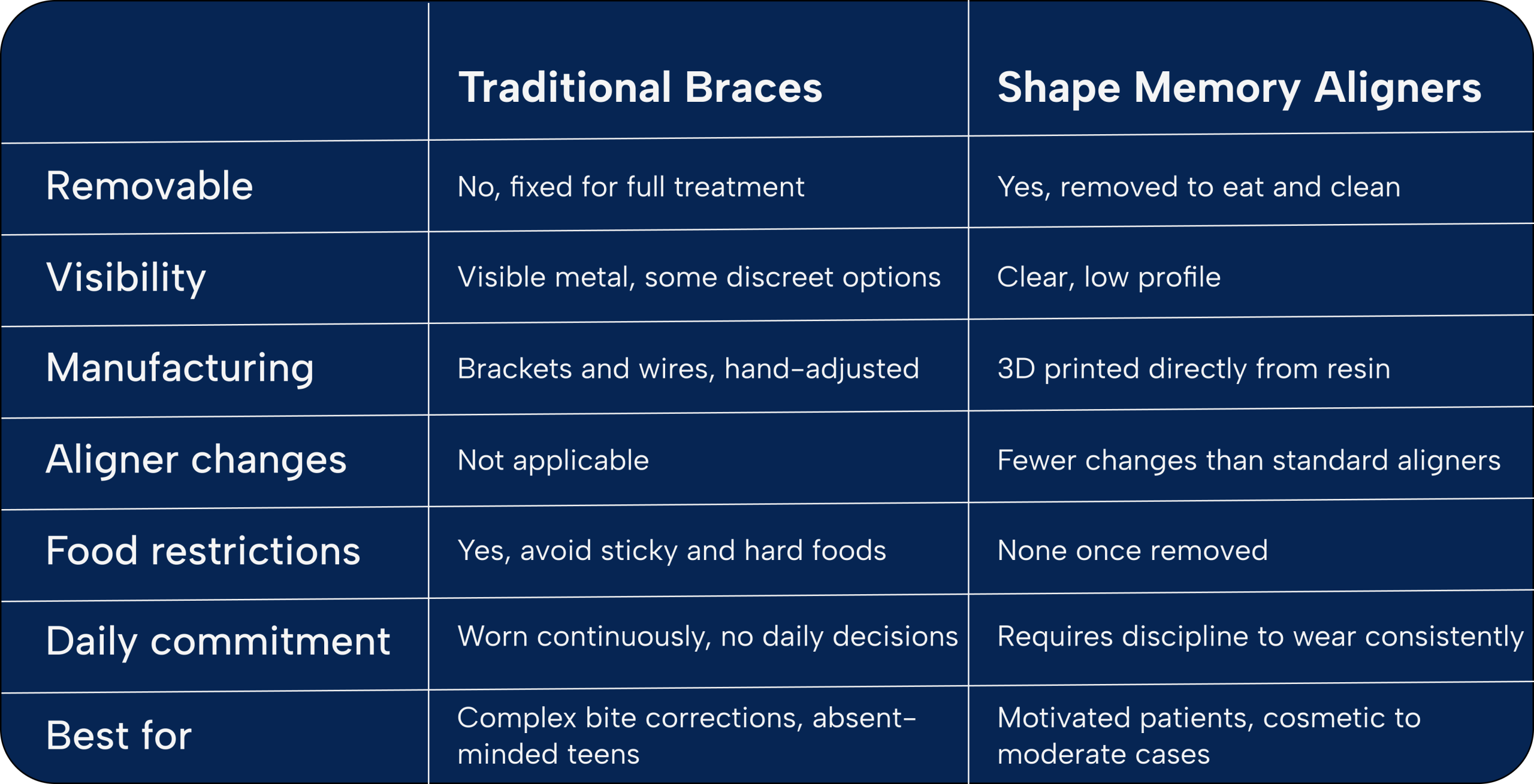
This comparison holds true in general, but the right fit always depends on the specific alignment issue, which is something only an orthodontist can assess after an exam.
Who Each Option Is Best For:
Traditional braces still make sense for patients with more complex bite issues, significant crowding, or cases that need precise control over root movement. Because braces are bonded and can’t be removed, they’re also a practical choice for younger patients who might not consistently wear a removable appliance.
Shape memory aligners tend to suit patients who want a lower-visibility option and are motivated to follow a wear schedule. Because a single Graphy dental aligner can complete more of the treatment step than a standard aligner tray, patients who want fewer trips to the orthodontist and a faster overall process are often good candidates. The system also appeals to patients who have tried standard clear aligners in the past and found the fit loosened, or the force weakened before the recommended wear period was up.
Anyone searching for the best clear aligners for teens should weigh discipline against convenience. Aligners only work if they’re worn as directed, generally around 22 hours a day. Teens who are reliably responsible with removable appliances tend to do well with shape memory aligners. Teens who are more likely to lose or forget appliances may do better with a fixed option like traditional braces.
Maintenance and Daily Care:
Traditional braces require normal brushing and flossing, with extra attention around brackets and wires, plus avoiding foods that could bend a wire or dislodge a bracket. Because nothing is removed, there’s no separate cleaning routine for the appliance itself.
Shape memory aligners are cleaned differently than they’re maintained. A soft toothbrush handles daily cleaning, and the aligner can be sterilized by soaking it in hot water for a few minutes. That same hot water also restores the aligner’s shape if it’s been wrapped or deformed after being removed. One practical advantage worth noting: because the material can be sanitized this easily and holds its shape, shape memory aligners without case storage is a realistic option. If you remove your aligner to eat and don’t have a case on hand, the aligner can be safely set aside and simply rewarmed before reinsertion, something standard aligners generally can’t do without risking damage or losing their shape entirely.
Handling does require some care. Shape memory aligners are rigid at room temperature and can crack or fracture if forced onto the teeth cold or bent aggressively. Warming the aligner before every insertion isn’t optional; it’s part of how the material is designed to work.
Cost and Choosing the Right Option:
Cost for any orthodontic treatment depends heavily on the complexity of the case, not just the type of appliance chosen. Traditional braces, standard clear aligners, and shape memory aligners can each land at different price points depending on the length of treatment, the severity of misalignment, and the specific product used. It’s possible for shape memory aligners to be priced in line with traditional aligners, and in some cases, the reduced number of trays needed can offset costs elsewhere in treatment.
An orthodontist can give an accurate estimate only after an exam, since two patients with different alignment needs may see very different quotes for the same treatment type. This makes an initial consultation the most useful first step, regardless of which option looks appealing on paper.
Making the Decision:
Both traditional braces and shape memory aligners can deliver a straighter, healthier smile. The right choice comes down to a combination of factors: how complex the alignment issue is, how disciplined the patient will be with a removable appliance, how much visibility matters day to day, and what the treatment timeline needs to look like.
For patients comparing traditional braces vs aligners for the first time, it helps to think less about which option is trendier and more about which one fits daily life. Someone who wants to avoid food restrictions and prefers a low-visibility treatment may lean towards shape memory aligners. Someone who needs a more hands-off, always-on approach, or who has a more complex bite to correct, may still be better served by traditional braces.
Talking to an orthodontist who offers both options is the most reliable way to land on the right answer. A proper exam will account for the specific movement needed, the timeline you’re working with, and which material, standard plastic or shape memory, is best equipped to get you there.
Frequently Asked Questions:
- Are shape memory aligners as effective as traditional braces? For mild to moderate alignment issues, shape memory aligners can achieve comparable results. Because the material grips the tooth more fully and sustains force longer than standard aligner plastic, many orthodontists find they offer better control than earlier generations of clear aligners. Complex bite corrections or significant root movement may still call for traditional braces.
- Do shape memory aligners take less time than standard clear aligners? Often, yes. Because a single Graphy dental aligner can complete a treatment step that would otherwise require two or three standard trays, patients may move through their treatment plan with fewer aligner changes and, in some cases, a shorter overall timeline.
- Is it true you don’t need a case for shape memory aligners? The material’s ability to be sanitized in hot water and reshaped on demand means clear aligners without case storage are a practical option in a pinch. That said, carrying a case is still a good habit for protecting the aligner from damage or loss.
- Can teens use shape memory aligners? Yes, however, success depends on the individual. Like any removable aligner, results rely on wearing the appliance around 22 hours a day. Parents weighing the best clear aligners for teens should consider their teen track record with responsibility and routine before choosing a removable option over fixed braces.
- How do I know which option is right for me? The only way to know for certain is a consultation with an orthodontist. They’ll evaluate the complexity of your case, discuss your lifestyle and preferences, and recommend whether traditional braces, standard clear aligners, or shape memory aligners will get you to your goal most effectively.
